Product Overview
一. Definition and Core Principle
II. Key Technical Specifications
Shrink Ratio: Common ratios include 2:1, 3:1 and 4:1 (the inner diameter after shrinkage is 1/2, 1/3 and 1/4 of the original size respectively).
Temperature Resistance: Ordinary polyolefin: -55 °C ~ 125 °C; Fluoroplastics: above 200 °C.
Wall Thickness: Thin-wall (0.15–1.0 mm), medium-wall, thick-wall and dual-wall (with hot-melt adhesive for waterproof sealing).
Flame Retardancy: Compliant with standards such as VW-1 and UL224.
Colors: Black, red, yellow, blue, green, white and transparent (for marking purposes).
III. Main Material Classifications
Polyolefin (PO)
The most widely used material. Operating temperature: -55 °C ~ 125 °C. Features excellent insulation, good chemical resistance and low cost.
PVC
Rated for 85 °C / 105 °C. Low cost and fast shrinkage speed. Limited temperature and weather resistance, mainly applied to low-voltage and indoor scenarios.
PET
High mechanical strength, halogen-free and eco-friendly with superior insulation. Temperature resistance up to 125 °C, ideal for electronics and battery applications.
Fluoroplastics (PTFE/FEP)
Withstanding temperatures above 200 °C, resistant to strong acids and alkalis, and featuring low friction. Used in aerospace, military and high-voltage fields.
Silicone Rubber & Elastomers
Extreme flexibility, wide temperature tolerance (-60 °C ~ 180 °C). Used to relieve stress for wire harnesses and connectors.
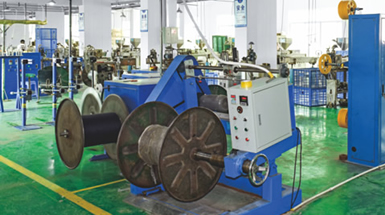
IV. Manufacturing Process
Batching: Mix polymers (PE/EVA) with additives including flame retardants, antioxidants and color masterbatches.
Extrusion: Melt and extrude the mixture into tubular preforms.
Radiation Cross-linking: Irradiate preforms with an electron accelerator at a dose of 50–150 kGy to form cross-linked networks.
Thermal Expansion: Heat the tubes to 120–180 °C and expand them radially to the target diameter.
Cooling & Shaping: Rapidly cool the expanded tubes to fix the expanded dimension.
Custom Printing: Laser marking for durable, fade-resistant printing.
Cutting & Testing: Cut tubes to specified lengths; conduct tests on dimensions, shrinkage rate and voltage resistance.
V. Core Functions
Electrical Insulation: Prevent electric leakage and short circuits.
Moistureproof Sealing: The inner hot-melt adhesive of dual-wall tubing melts to fill gaps and deliver waterproof protection.
Mechanical Protection: Resist abrasion, impact and tension, and prevent fracture caused by bending.
Stress Relief: Dispense stress on connectors and wire harnesses to avoid fatigue failure.
Identification & Classification: Colored tubes distinguish voltages and functions; laser marking facilitates identification and maintenance.
VI. Typical Applications
Electronics & Electrical Engineering: Insulation and protection for wire harnesses, solder joints, terminals and PCBs.
Automotive, New Energy & Energy Storage: High-voltage wiring harnesses, battery packs, sensors and engine compartments (oil-resistant and flame-retardant).
Power & Energy Industry: Busbars, cable joints, photovoltaic and wind power facilities (outdoor weather resistance).
Aerospace & Military: Adapt to high-temperature, high-pressure and harsh environments (adopting fluoroplastics and high-performance materials).
Telecommunications: Protection for optical fiber splices and sealing for RF connectors.
VII. Selection Guidelines
Shrink Ratio: The maximum outer diameter of the wrapped object shall not exceed the inner diameter of the fully shrunk tubing. 2:1 for general use; 3:1 for irregular objects or large wrapping coverage.
Temperature Resistance: The long-term operating temperature shall not exceed the rated temperature of the tubing. Select fluoroplastics or silicone rubber for extreme temperature environments.
Functional Requirements: Choose dual-wall adhesive-lined tubing for waterproof sealing; thick-wall tubing with high dielectric strength for high-voltage insulation; UV-stabilized black tubing for outdoor use.
Certifications: Prioritize products certified to UL, RoHS, VW-1, REACH and other relevant standards.
VIII. Development Trends
Eco-friendliness: Halogen-free, low-smoke and non-toxic materials are gradually replacing traditional PVC.
High Performance: Growing demand for products with enhanced resistance to high temperature, high pressure and oil, as well as low-smoke halogen-free properties.
Multi-functional Composites: Co-extruded structures combining outer heat-shrinkable layer with inner elastic, conductive or shielding layers.
Intelligent Manufacturing: Precise control over heating temperature and duration, alongside widespread adoption of automated production equipment.